
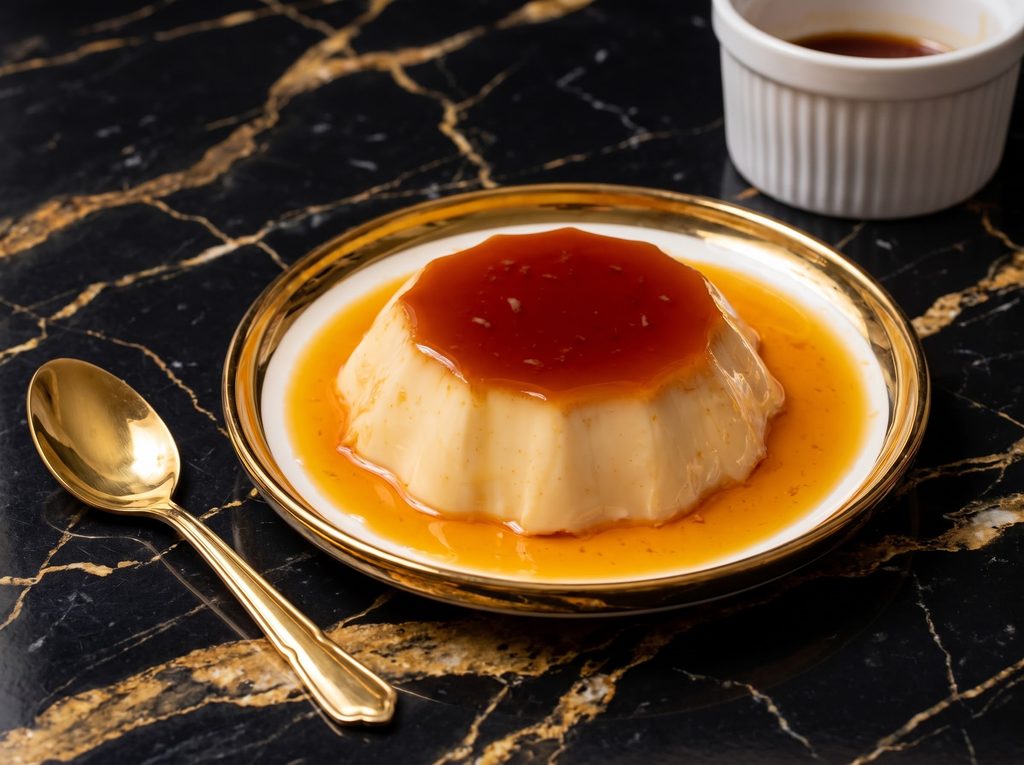
This is Authentic Spanish Flan . a silky, foolproof custard with deep amber caramel no cracks, no curdling, no weird rubbery bits. Just the real thing.
If you have ever baked a flan that turned out rubbery, full of tiny air holes, or collapsed into a weeping puddle on the plate, the problem isn’t your skill it’s your ratios. Perfect Spanish flan is a masterclass in culinary science, relying entirely on the delicate balance between egg proteins, dairy fat, and precise caramelization.
Let’s break down exactly how to control the texture and build a flawless custard.
Prep: 15 minutes Resting Time: 30 minutes Cook: 60 -75 minutes Chill: 6+ hours Total Active Time: 1 hour 30 minutes Yield: 8 servings
The Secret to the Perfect Texture
The Egg Ratio: Finding the Sweet Spot
The texture of your flan is dictated by the exact ratio of yolks to whites.
⚫ Too many whole eggs: The high albumin (egg white) content creates a rigid, bouncy structure. It will unmold easily, but the mouthfeel will be rubbery and overly “eggy.”
⚫ Too many yolks: Incredible flavor, but disastrous structure. Without enough egg whites acting as the structural “glue,” the flan will be too fragile and collapse when inverted.
⚫ The Master Ratio (6 Yolks + 2 Whole Eggs): This is the ultimate balance. The six yolks deliver a dense, velvety, melt-in-your-mouth richness, while the two whole eggs provide just enough structural integrity to hold a sharp, beautiful edge when sliced.
The Dairy Matrix
Do not use standard whole milk. Regular milk is approximately 87% water. When baked, that water separates, leaving you with an icy custard that leaks watery puddles onto your serving plate.
Authentic Spanish flan relies on concentrated dairy. Evaporated milk provides intense creaminess without the excess water, while sweetened condensed milk delivers a thick, distinct cooked-sugar flavor that regular granulated sugar cannot replicate.
The Caramel
You are looking for a deep mahogany wet caramel cooked to roughly 350°F (175°C). If you stop at a light golden amber, it will just taste like sweet syrup. Pushing the sugar to a darker mahogany breaks down the molecules into complex, slightly bitter aromatic compounds. That slight bitterness is essential to cut through the heavy sweetness of the condensed milk.
Why You’ll Love This Flan
- It’s genuinely foolproof once you know the tells. No candy thermometer required — just your eyes, your nose, and a gentle jiggle test.
- It’s a true make-ahead dessert. It needs to chill overnight, so there’s zero last-minute stress. Make it two days before you need it and it’ll be even better.
- Seven ingredients, most already in your kitchen. No gelatin, no cornstarch, no water bath anxiety once you’ve done it once.
- That unmolding moment. There’s a reason flan videos rack up views — watching the caramel cascade down a chilled custard never gets old.
- Naturally gluten-free, and easy to make dairy-free with one swap (see the Variations section below).
Three Non-Negotiable Chef Hacks
1, The 30-Minute Rest: After mixing your custard, leave the bowl on the counter for 30 minutes. This allows trapped, microscopic air bubbles to float to the surface and pop. If you bake those bubbles into the flan, the interior will look like a kitchen sponge instead of glass.
2. The Double-Strain: Pour your liquid custard through a fine-mesh strainer twice before pouring it into the mold. This catches the chalazae (the white stringy bits of the egg) and guarantees a perfectly silky bite.
3. The Towel-Lined Water Bath: Never place your flan pan directly on the metal bottom of your roasting pan. Place a folded dish towel flat on the bottom of the water bath, then sit your flan dish on top. This insulates the custard from the aggressive, direct heat of the oven floor, preventing the bottom from overcooking and scrambling.
The Secret to the Best Flan Texture
A perfect flan comes down to how you balance your eggs and your milk. Here is what happens when you change the rules:
The Egg Ratio
- Using all whole eggs: Your flan will be very firm and hold its shape perfectly when you flip it, but the texture will feel a bit rubbery and taste too “eggy.”
- More yolks + a couple of whole eggs (The Master Mix): This is the sweet spot. Extra egg yolks give you that incredibly rich, velvety, melt-in-your-mouth creaminess. The two whole eggs act as the structural “glue” so the flan holds its beautiful shape on the plate.
- Using all yolks: It will taste amazing, but it will be far too fragile. When you flip the pan, the flan will likely collapse into a delicious puddle.
The Milks
- Regular milk + white sugar: Regular milk is mostly water. If you use it, your flan will be thin, icy, and leak watery puddles onto the plate.
- Evaporated milk + Sweetened condensed milk: The authentic standard. Evaporated milk has the water cooked out, making it rich and creamy. Condensed milk gives the flan a thick, cooked-sugar flavor that regular sugar simply cannot replicate.
The Caramel Color
You want to cook the sugar until it looks like dark maple syrup (a deep mahogany color). If you stop when it’s light golden, it just tastes like plain sugar. Pushing it to a darker color gives the caramel a very slight, pleasant bitterness that perfectly balances out the ultra sweet custard.
3 Common Mistakes to Avoid
1. Boiling the water bath: The water in your roasting pan should be hot, but never bubbling or boiling. Boiling water cooks the flan too fast and literally scrambles the eggs, leaving you with a spongy dessert full of holes.
2.Stirring the caramel: When you are melting the sugar and water for the caramel, do not stir it with a spoon or whisk. Stirring makes the sugar clump up into hard, grainy rocks. Just gently swirl the pan by the handle instead.
3.Flipping it too soon: Flan must chill in the fridge for a minimum of 12 hours (24 is even better). This chilling time is when it actually sets up and gets firm. If you try to flip it out of the pan while it is still warm, it will break apart completely.is still warm, it will break apart completely.
Instructions
- Prep the Oven and Water Bath: Preheat your oven to 350°F (175°C). Place a folded dish towel flat on the bottom of a large roasting pan. Set your 8-inch round flan pan (or baking dish) on top of the towel.
- Make the Caramel: In a small saucepan, combine the sugar and water over medium-high heat. Do not stir with a spoon. Gently swirl the pan by the handle until the sugar melts and turns a deep mahogany brown (about 8-10 minutes).
- Coat the Pan: Immediately pour the hot caramel into your flan pan. Carefully tilt the pan in a circular motion to coat the bottom and slightly up the sides. Set aside to cool and harden into a glass-like sheet.
- Mix the Custard: In a large mixing bowl, gently whisk the sweetened condensed milk, evaporated milk, egg yolks, whole eggs, vanilla, and salt until completely uniform. Whisk gently—do not whip air into the batter.
- Rest the Batter: Let the custard bowl sit uncovered on the counter for 30 minutes to allow air bubbles to escape.
- Double Strain: Pour the rested custard through a fine-mesh strainer twice. Pour the completely smooth liquid directly over the hardened caramel in your flan pan.
- Bake in a Water Bath: Pour hot (not boiling) water into the roasting pan until it reaches halfway up the outside of your flan pan. Bake for 60 to 75 minutes. The center should jiggle slightly like gelatin when gently shaken.
- Chill to Set: Remove the flan from the water bath and let it cool to room temperature on a wire rack. Cover tightly with plastic wrap and refrigerate for a minimum of 12 hours (24 hours is optimal).
- Unmold and Serve: Run a thin, sharp knife around the very edge of the flan to loosen the vacuum seal. Place a rimmed serving plate upside down over the pan, hold tightly, and quickly invert them together. The flan will gracefully drop, and the liquid caramel will pool perfectly around the base.
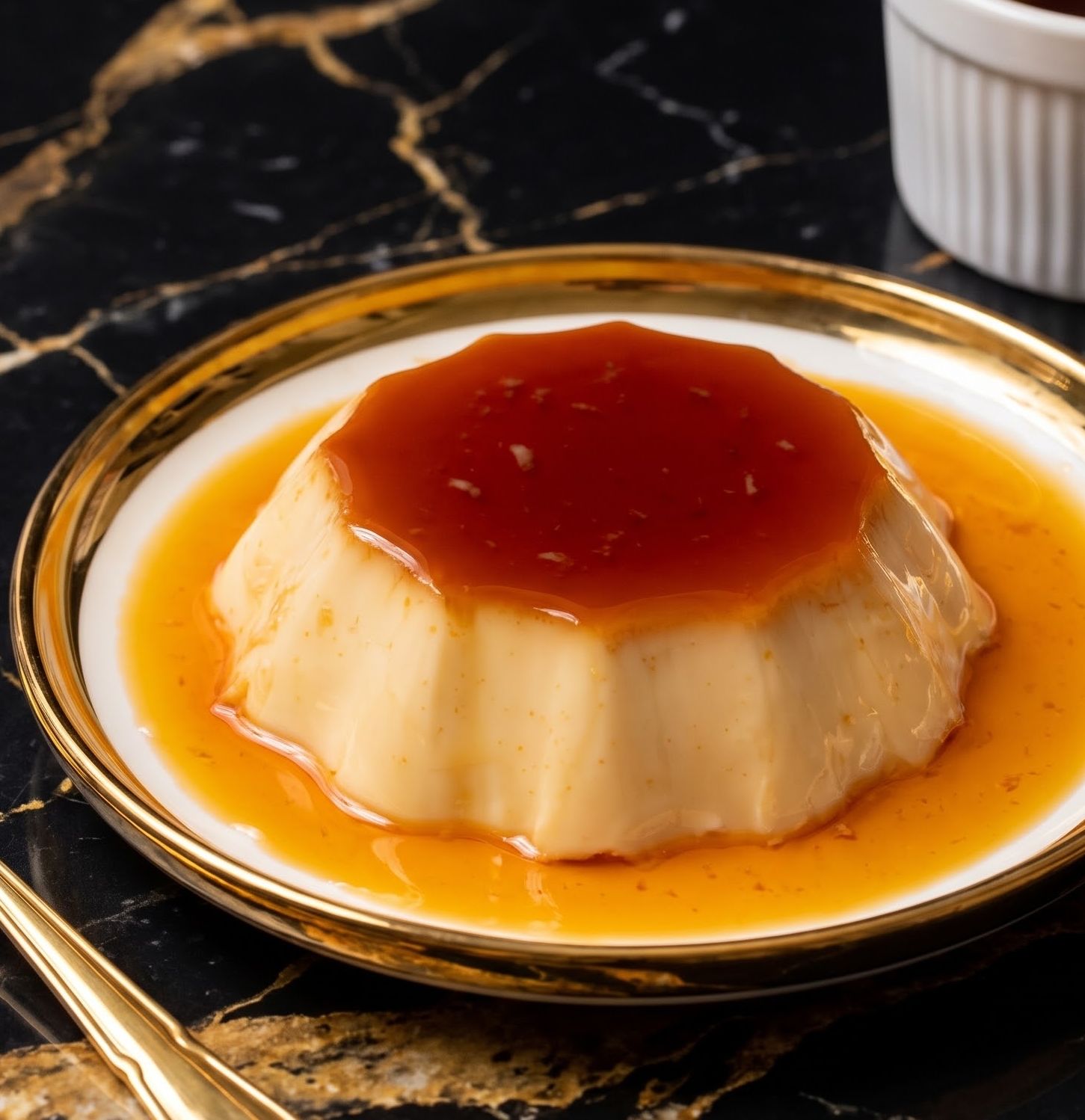
Authentic Spanish Flan
Ingredients
Method
Notes
Troubleshooting Common Texture Flaws
| Problem | The Cause | The Fix |
| Spongy texture with little holes | The water bath was boiling, causing the eggs to overcook and scramble. | Ensure the water in your roasting pan is hot but not bubbling. Keep oven at exactly 350°F (175°C). |
| Watery puddles on the plate | Using regular milk instead of evaporated and condensed milk. | Stick to the canned milks. Regular milk has too much water, which separates and leaks out after baking. |
| Hard, grainy caramel | Stirring the sugar with a spoon while melting. | Never use utensils to stir the wet caramel. Only swirl the pan gently by the handle. |
| Flan collapsed when flipped | It was flipped while too warm, or the recipe didn’t have enough whole eggs to hold it together. | Chill for at least 12 hours in the fridge before unmolding so the fats and proteins fully set. |