Ingredients
Method
Prep the Oven and Water Bath: Preheat your oven to 350°F (175°C). Place a folded dish towel flat on the bottom of a large roasting pan. Set your 8-inch round flan pan (or baking dish) on top of the towel.
Make the Caramel: In a small saucepan, combine the sugar and water over medium-high heat. Do not stir with a spoon. Gently swirl the pan by the handle until the sugar melts and turns a deep mahogany brown (about 8-10 minutes).
Coat the Pan: Immediately pour the hot caramel into your flan pan. Carefully tilt the pan in a circular motion to coat the bottom and slightly up the sides. Set aside to cool and harden into a glass like sheet.
Mix the Custard: In a large mixing bowl, gently whisk the sweetened condensed milk, evaporated milk, egg yolks, whole eggs, vanilla, and salt until completely uniform. Whisk gently do not whip air into the batter.
Rest the Batter: Let the custard bowl sit uncovered on the counter for 30 minutes to allow air bubbles to escape.
Double Strain: Pour the rested custard through a fine-mesh strainer twice. Pour the completely smooth liquid directly over the hardened caramel in your flan pan.
Bake in a Water Bath: Pour hot (not boiling) water into the roasting pan until it reaches halfway up the outside of your flan pan. Bake for 60 to 75 minutes. The center should jiggle slightly like gelatin when gently shaken.
Chill to Set: Remove the flan from the water bath and let it cool to room temperature on a wire rack. Cover tightly with plastic wrap and refrigerate for a minimum of 12 hours (24 hours is optimal).
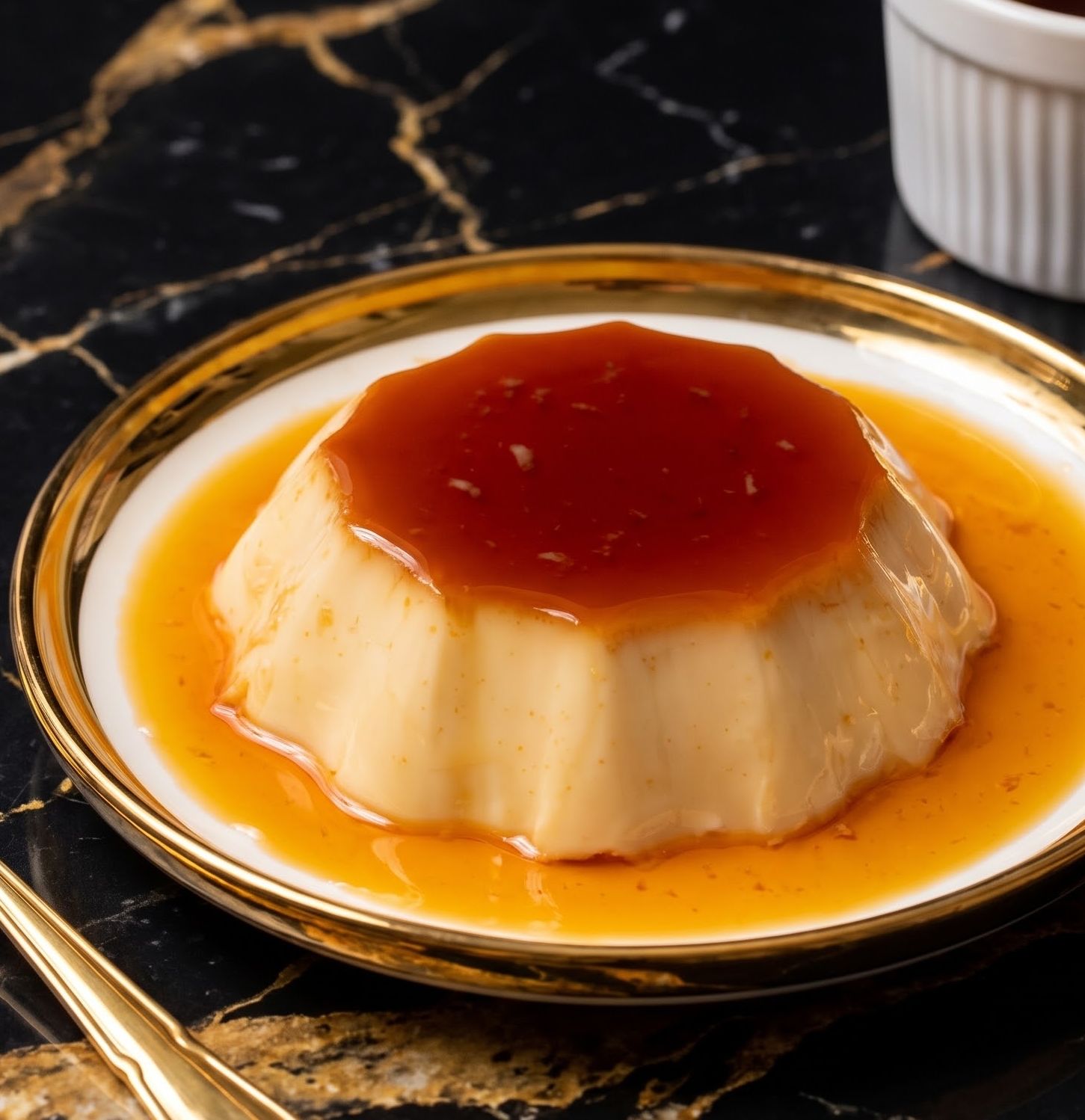
Unmold and Serve: Run a thin, sharp knife around the very edge of the flan to loosen the vacuum seal. Place a rimmed serving plate upside down over the pan, hold tightly, and quickly invert them together. The flan will gracefully drop, and the liquid caramel will pool perfectly around the base.
Notes
. Make-Ahead Mandatory (Do Not Rush) Flan is strictly a make-ahead dessert. It requires a minimum of 12 hours (preferably 24 hours) in the refrigerator. This chilling phase is when the egg proteins and dairy fats fully stabilize. Unmolding a warm flan guarantees it will collapse into a puddle.
2. The Towel Trick (Texture Insurance) Never skip placing a folded kitchen towel at the bottom of your roasting pan before adding the water bath. The towel acts as an insulator, preventing the metal flan mold from touching the intensely hot floor of the oven. Without it, the bottom of the flan will overcook, scramble, and turn spongy.
3. Water Bath Temperature Warning The water you pour into the roasting pan must be hot, but never boiling. If the water boils in the oven, the exterior of the custard reaches 212°F (100°C), which overcooks the eggs and leaves your flan riddled with tiny air holes. Keep the oven locked at 350°F (175°C).
4. Caramel Golden Rule When melting the sugar and water, absolutely no spoons or whisks. Stirring introduces crystallized sugar to the sides of the saucepan, causing a chain reaction that will seize your caramel into a hard, grainy mess. Swirl the pan gently by the handle instead. Work quickly when pouring; the caramel hardens into glass within seconds.
5. Storage & Leftovers Store leftover flan in the refrigerator, covered tightly with plastic wrap so it doesn't absorb fridge odors, for up to 4 days. The caramel will slowly continue to draw moisture from the custard, creating even more delicious liquid syrup over time.